
Please Leave Us A Message
Privacy statement: Your privacy is very important to Us. Our company promises not to disclose your personal information to any external company with out your explicit permission.

 Product Categories
Yes, motion sensor faucets can save water, but the real savings depend on how people use the sink and how the faucet is specified and tuned. In most bathrooms, the biggest source of waste is not high flow, it is water running when it is not needed. A Sensor Faucet addresses that behavior by turning water on only when hands are in the activation zone and turning it off immediately after use. When this is paired with an efficient flow rate, the savings become both measurable and repeatable across homes, hospitality projects, and commercial restrooms.
This article explains where the savings actually come from, how to estimate them with simple calculations, and how COIGN designs a sensor basin faucet for stable performance and project-ready consistency. For product specs and selection support, you can reference our sensor basin faucet.
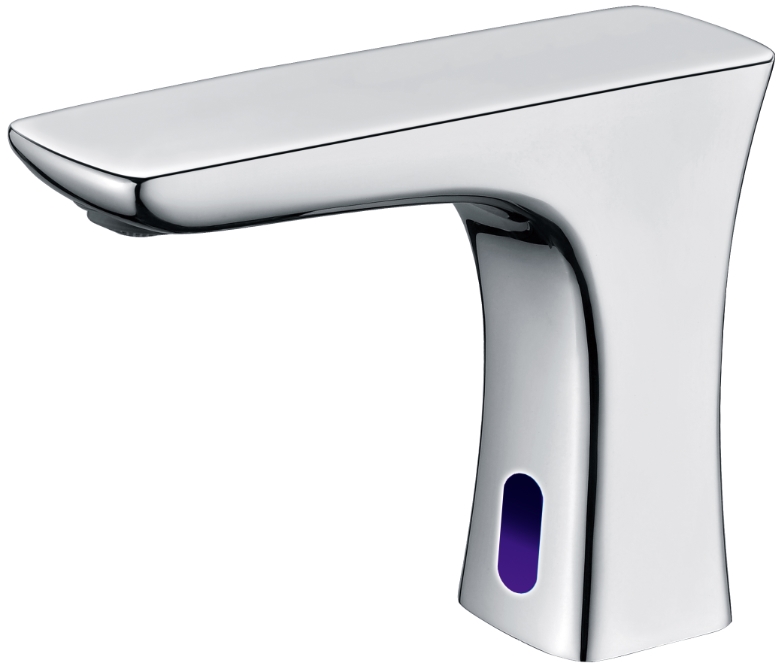
A manual faucet wastes water mainly in three moments: while waiting for temperature comfort, during soaping and scrubbing, and when users forget to fully shut it off. The sensor model reduces these losses by design.
Key water-saving mechanisms:
The important point is that sensor technology targets behavior-driven waste, which is often the largest portion of avoidable faucet water use.
A sensor faucet saves the most water when it is also engineered with an efficient flow rate. In the US, WaterSense labeled bathroom sink faucets are specified at a maximum of 1.5 gallons per minute at 60 psi, which is at least 30 percent lower than the federal standard of 2.2 gallons per minute. WaterSense also includes a minimum flow performance requirement at lower pressure to maintain usability.
In many commercial restroom specifications, flow rates can be even lower. ASHRAE Standard 189.1 includes a reference value of 0.5 gpm for public lavatory faucets, reflecting common high-efficiency design targets in green building projects.
Practical takeaway: the sensor helps stop wasted run time, while the flow rate determines how much water is used during the time it is on. A strong specification uses both.
Because usage patterns vary, the most reliable way to evaluate savings is with a small set of assumptions and a transparent calculation. Below is a practical model you can use for planning and comparison.
Common reference points for bathroom sinks:
In real use, the biggest difference is often how long the water runs when hands are not actively rinsing. For handwashing, public health guidance commonly recommends scrubbing with soap for at least 20 seconds, which is a period where many people let water run if the faucet is manual. A sensor faucet can keep water off during that time, then re-activate only for rinsing.
Water used equals flow rate multiplied by run time.
| Scenario | Flow rate | Total water-on time per wash | Water per wash |
|---|---|---|---|
| Manual faucet, typical behavior | 2.2 gpm | 30 seconds | 1.10 gallons |
| Manual faucet, efficient habit | 2.2 gpm | 15 seconds | 0.55 gallons |
| Sensor faucet, efficient control | 1.5 gpm | 10 seconds | 0.25 gallons |
| Sensor faucet, commercial low flow | 0.5 gpm | 10 seconds | 0.08 gallons |
What this shows:
EPA WaterSense guidance notes that the Energy Policy Act of 1992 addresses metering faucets in public restrooms and sets a maximum water use of 0.25 gallons per cycle. That is a useful benchmark when your goal is to control water per use in shared facilities.
Not every sensor faucet automatically saves water in the real world. Poor sensor tuning, unstable power, or inconsistent mixing can cause repeated activations and longer run times. A project-ready faucet should be evaluated as a complete system.
Key selection points:
Stable sensor detection and activation range
A well-tuned activation zone reduces false triggers caused by reflections, basin geometry, or nearby movement. Fewer false triggers directly reduces wasted water-on time.
Fast shutoff response
The shutoff delay should be short and consistent. A long delay can erase the advantage of touchless control.
Flow rate options aligned with your project target
For hospitality and residential-style comfort, a 1.5 gpm approach aligns with WaterSense efficiency baselines. For commercial restrooms, lower-flow configurations are often specified for predictable savings and compliance goals.
Pressure resilience and consistent output
WaterSense requirements highlight the importance of maintaining usable flow even at lower pressure. A faucet that performs only at ideal pressure can lead to longer rinse times, which can offset savings.
Temperature management that avoids “extra running”
In some buildings, users run water longer while chasing a comfortable temperature. Sensor systems that support stable mixing and consistent delivery help reduce that behavior-driven waste.
COIGN focuses on engineering a sensor basin faucet as a repeatable, production-ready product, not a one-off assembly. That is especially important for OEM/ODM programs and bulk order projects where consistency across many rooms matters more than a single sample.
Our sensor basin faucet is built for bathrooms where water control, hygiene, and long-term stability must work together. The practical goal is simple: reduce unnecessary run time without creating user frustration that leads to longer rinses or repeated activations.
How COIGN supports water-saving outcomes:
If you are selecting for multi-room deployment, ask for a clear configuration plan that ties together flow rate, sensor response, and power strategy so the installed performance matches the planned savings.
Even a well-designed sensor faucet can lose efficiency if installation details are overlooked. The most common causes of reduced savings are sensor misalignment, delayed shutoff settings, or unstable water pressure.
Best practices:
Motion sensor faucets save water by cutting unnecessary run time and enforcing consistent shutoff. The most reliable savings come when the sensor control is paired with an efficiency-focused flow rate and stable real-world activation behavior. Use clear benchmarks such as WaterSense Bathroom Faucet flow targets and, for public restrooms, cycle-based limits to define what “water saving” means for your project.
If you want a sensor basin faucet that supports predictable water control with project-ready consistency, explore COIGN’s sensor basin faucet and align the configuration to your building type, usage intensity, and efficiency goals.


Contact

Send Inquiry
Related Products List
Privacy statement: Your privacy is very important to Us. Our company promises not to disclose your personal information to any external company with out your explicit permission.
Fill in more information so that we can get in touch with you faster
Privacy statement: Your privacy is very important to Us. Our company promises not to disclose your personal information to any external company with out your explicit permission.